

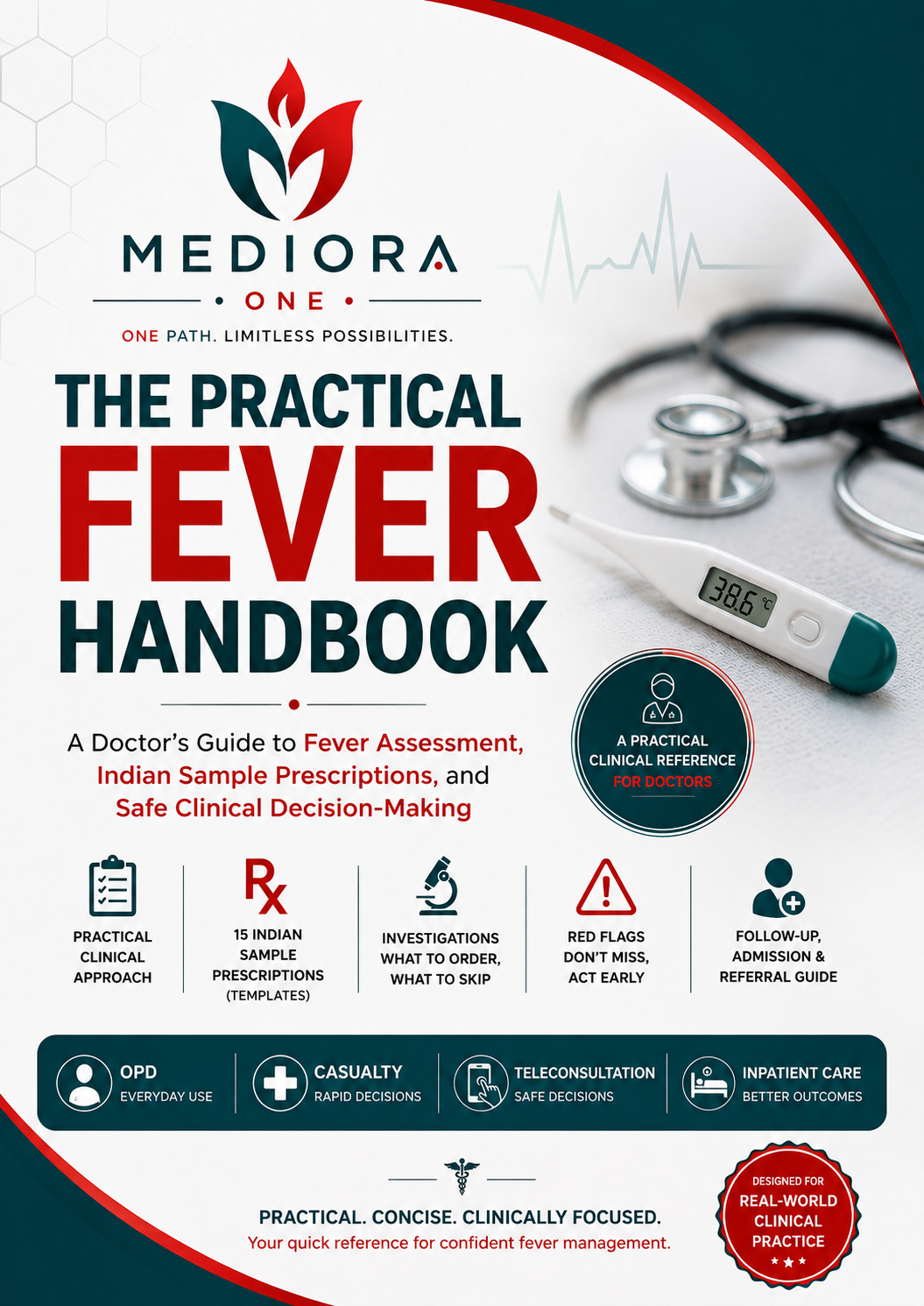
THE PRACTICAL FEVER HANDBOOK
The definitive clinical guide for the modern Indian physician. Master fever management with evidence-based frameworks, prescription templates, and investigation grids.
Digital Access — 365 Days — ₹249 ₹399
Fever is a symptom, not a diagnosis.
The OPD Reality
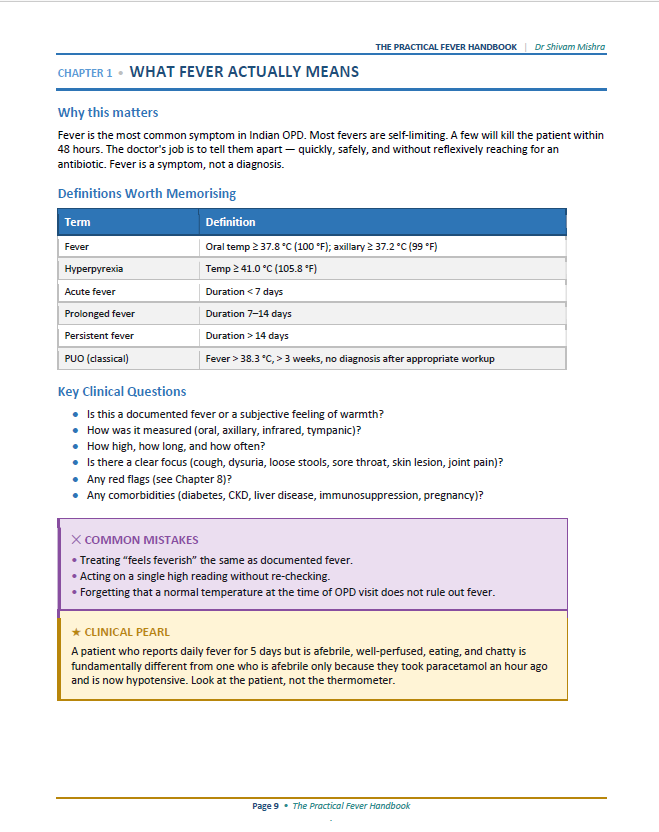
Fever is the most common symptom in Indian OPD. Most are self-limiting, but a few can be fatal within 48 hours.
Antibiotic Overuse
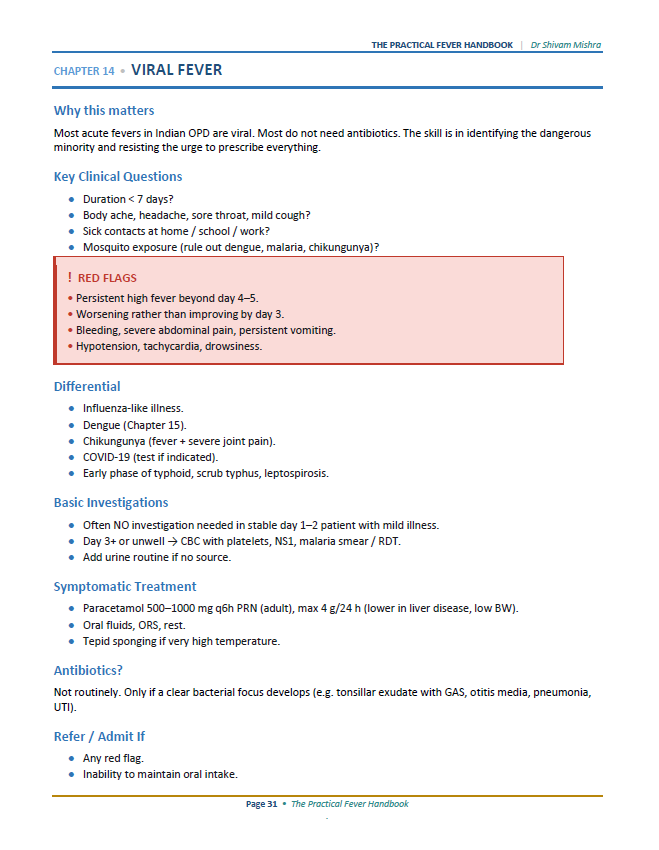
The pressure to prescribe is real. This handbook helps you resist the urge to reach for antibiotics reflexively.
Diagnostic Dilemma
Telling them apart quickly and safely is the doctor's primary job. We provide the framework to do exactly that.
Designed for the Frontline.
MBBS Students & Interns
Build a solid clinical foundation and learn how to approach fever systematically from day one.
General Practitioners
Update your practice with evidence-based protocols and optimize your OPD efficiency.
Residents & Postgraduates
A quick-reference tool for the wards and emergency department to make safe clinical decisions.
Digital Access
Instant access to the complete digital handbook.
365 Days Access
- Full Digital Handbook (PDF)
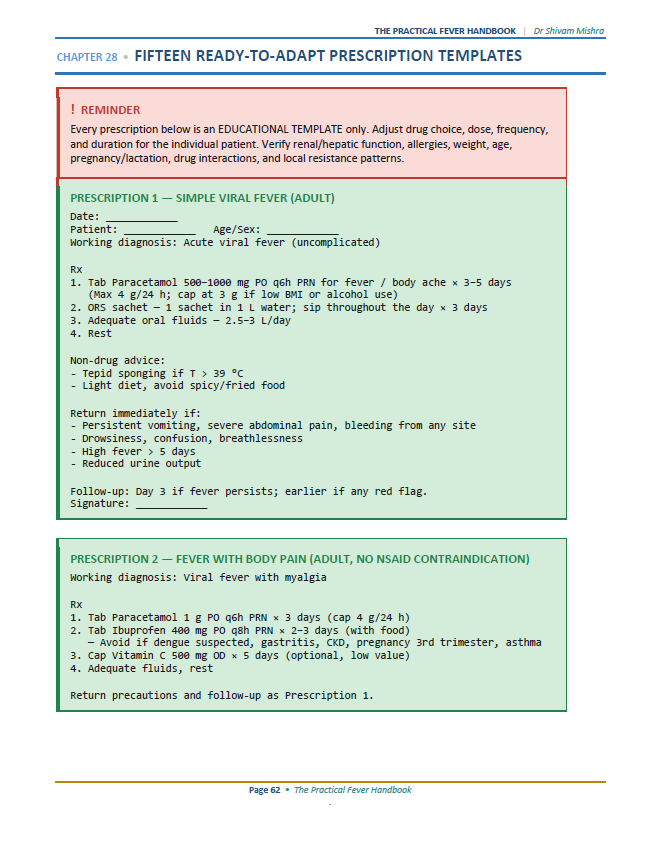
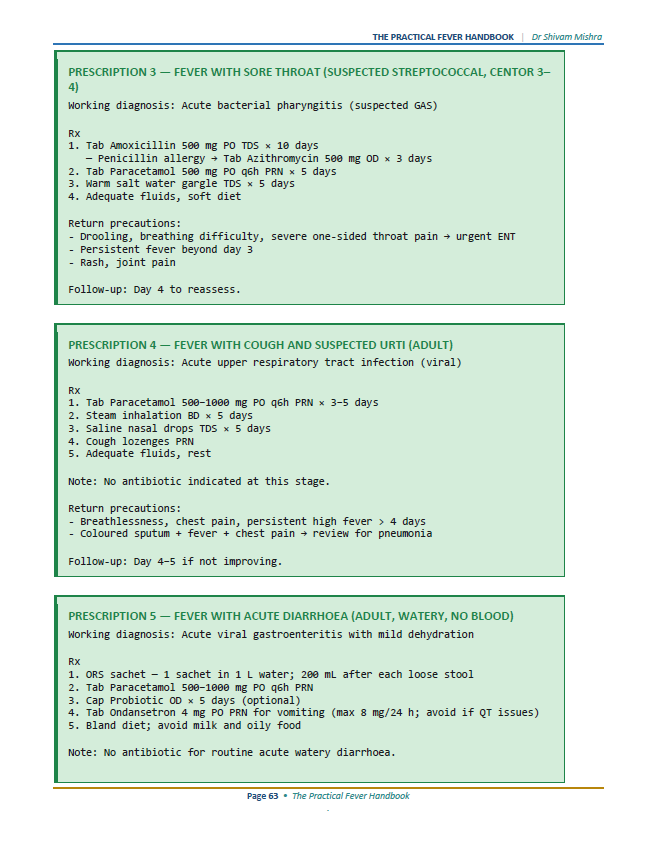
- 15 Prescription Templates
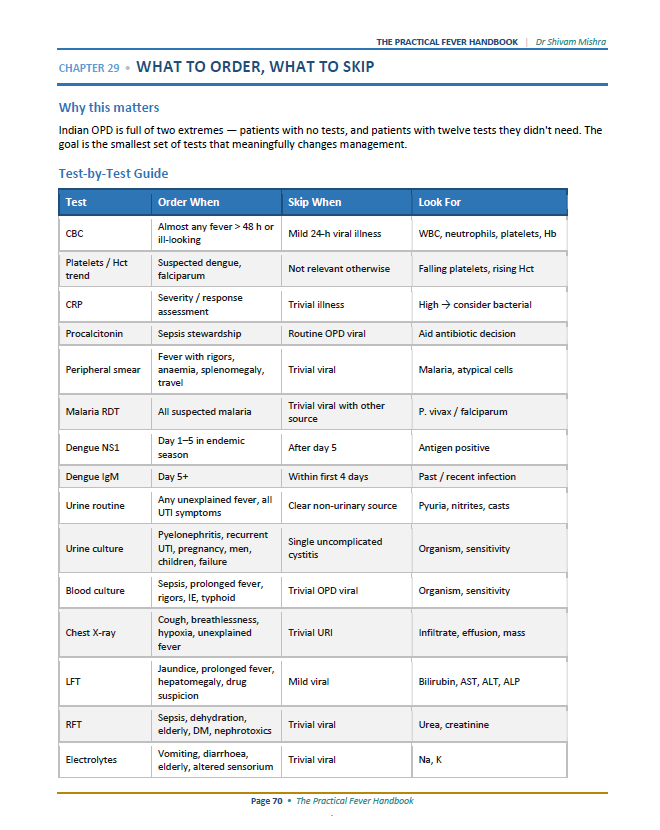
- Antibiotic & Investigation Grids
- Mobile-Friendly Access
🔒 Secure Payment via Graphy
Print Edition
Premium hardcopy delivered to your doorstep.
Physical Copy + Digital Access
- High-Quality Printed Handbook
- Includes 365 Days Digital Access
- Free Shipping Pan-India
Note: Shipping is handled separately. Please fill the form to request your copy.
Frequently Asked Questions
This is a digital handbook (PDF). For print/hardcopy versions, please note that shipping is handled separately. You can request a physical copy via this Google Form .
You get 365 days of digital access. Once you purchase, the handbook is available for your review for a full year, including all updates released during that period.
Absolutely. It's an excellent resource for MBBS students and interns to build a practical clinical foundation that textbooks often miss.
The templates are educational guides. You should always adapt them based on the individual patient's clinical presentation, allergies, and local resistance patterns.
Not sure which resource fits you?
Tell us your goal. The MedioraOne team can help you choose a course, book or plan.
Send your course question securely using our enquiry form. Our team can respond by email or phone/WhatsApp if you provide a number.
Medical learning resources for students, aspirants and doctors.
Connect
© 2026 MedioraOne. Educational resources; not a substitute for individual clinical judgment.